
About Future Care Lab in Japan
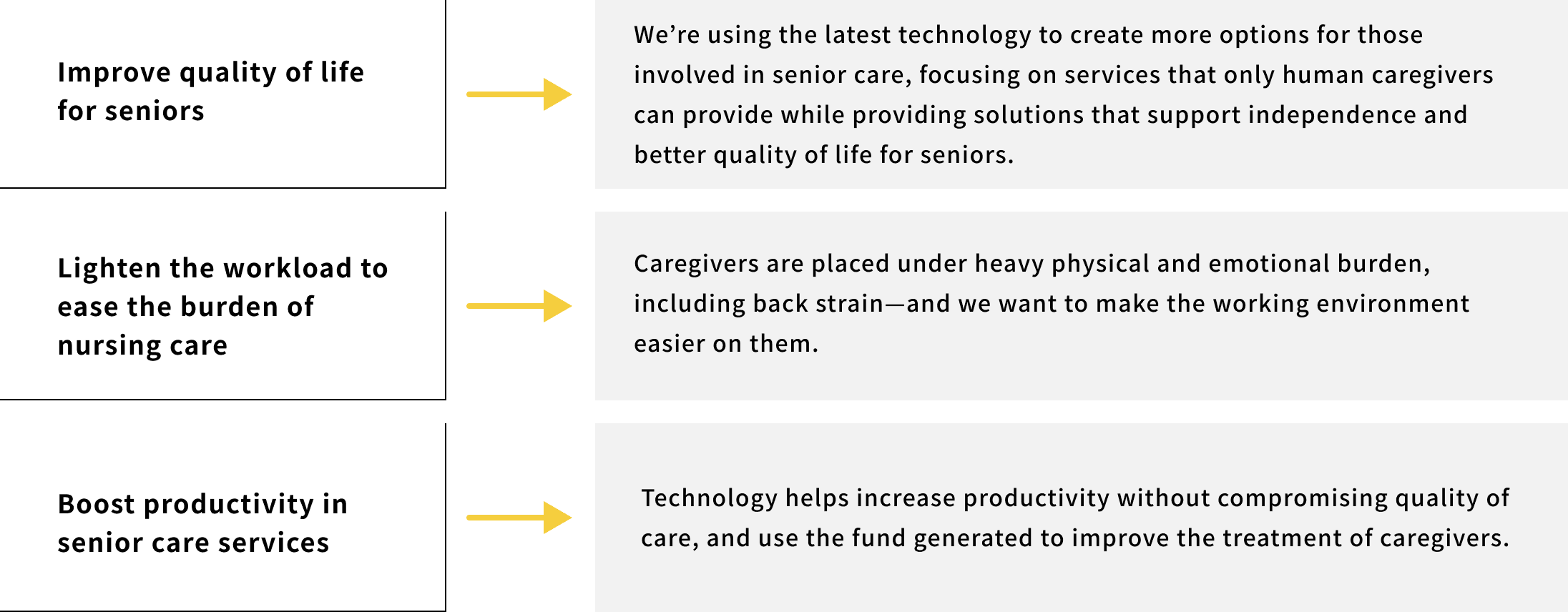
By serving as a bridge between the front lines of care and technology developers,
we support evaluation and implementation of “technology that truly works in the field”.
Co-creating solutions forimplementationwith a team of experts.
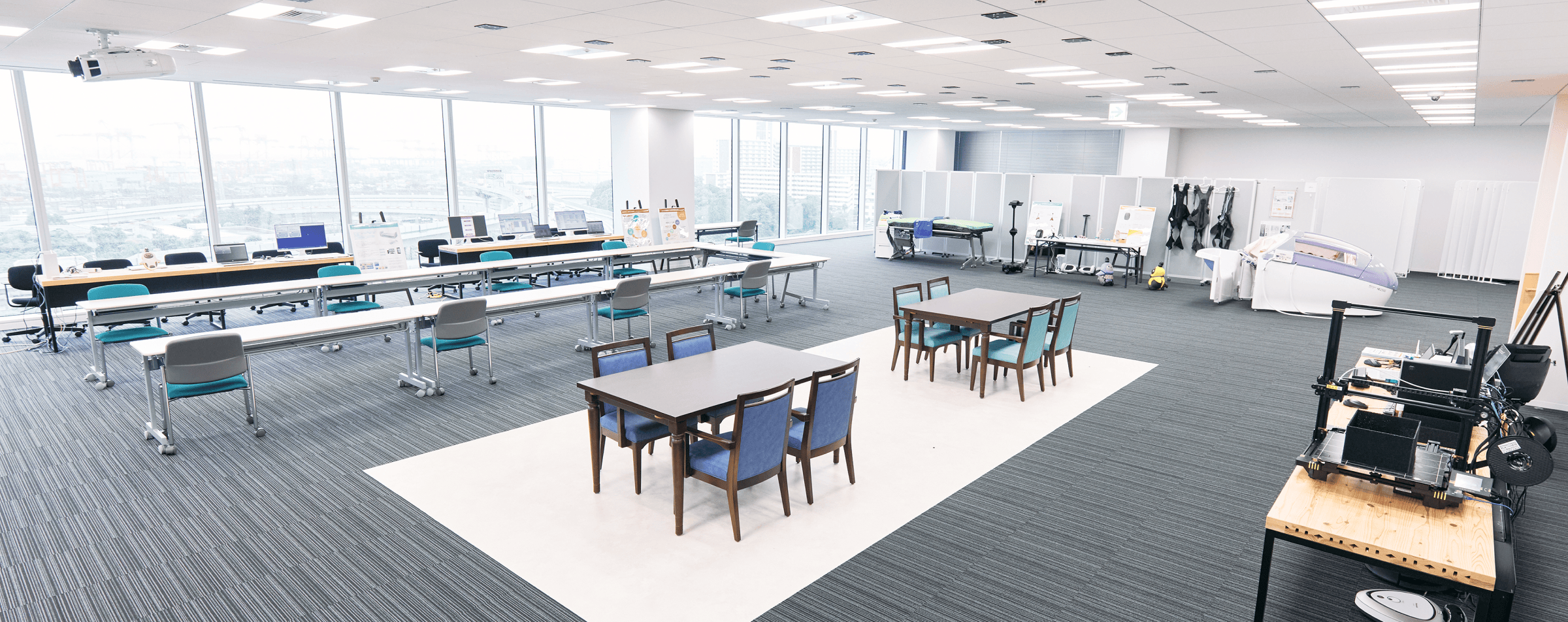
This is a “Living Lab”,where theideals of nursing caretake shape.
What we value is the “Living Lab” framework. This is a place where professionals from both care and development become one team, conducting evaluation in simulated environments and repeatedly testing in actual settings to nurture products and services that truly make a difference.
“Great technology, but it doesn’t fit the field’s workflow.” “Introduced, but too difficult to use.” We eliminate such mismatches. From this place, we will spread a “future of care” that simultaneously reduces staff burden and improves the quality of care to society.

Purpose
Solving challenges on the front lines of care through evaluation.
FCL’s goal is not simply to introduce new technology to the field.
For challenges such as “heavy workloads”, “staff shortages”, or “wanting to improve efficiency but not knowing where to start”, our mission is to select the right technology for the specific environment and lead it toward a solution through evaluation.
We focus on creating a sustainable model where technology is “continuously utilized”, rather than a one-time implementation.
Specific Activities
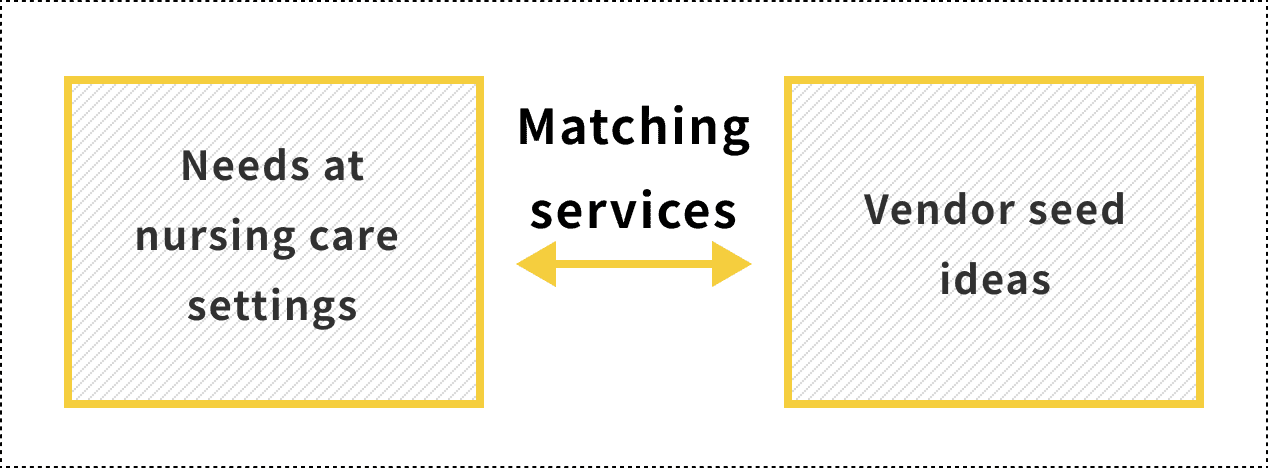
FCL matches seed ideas from development companies
with the needs of nursing care settings.
Background
The Reality where Technology remains “Underutilized”.
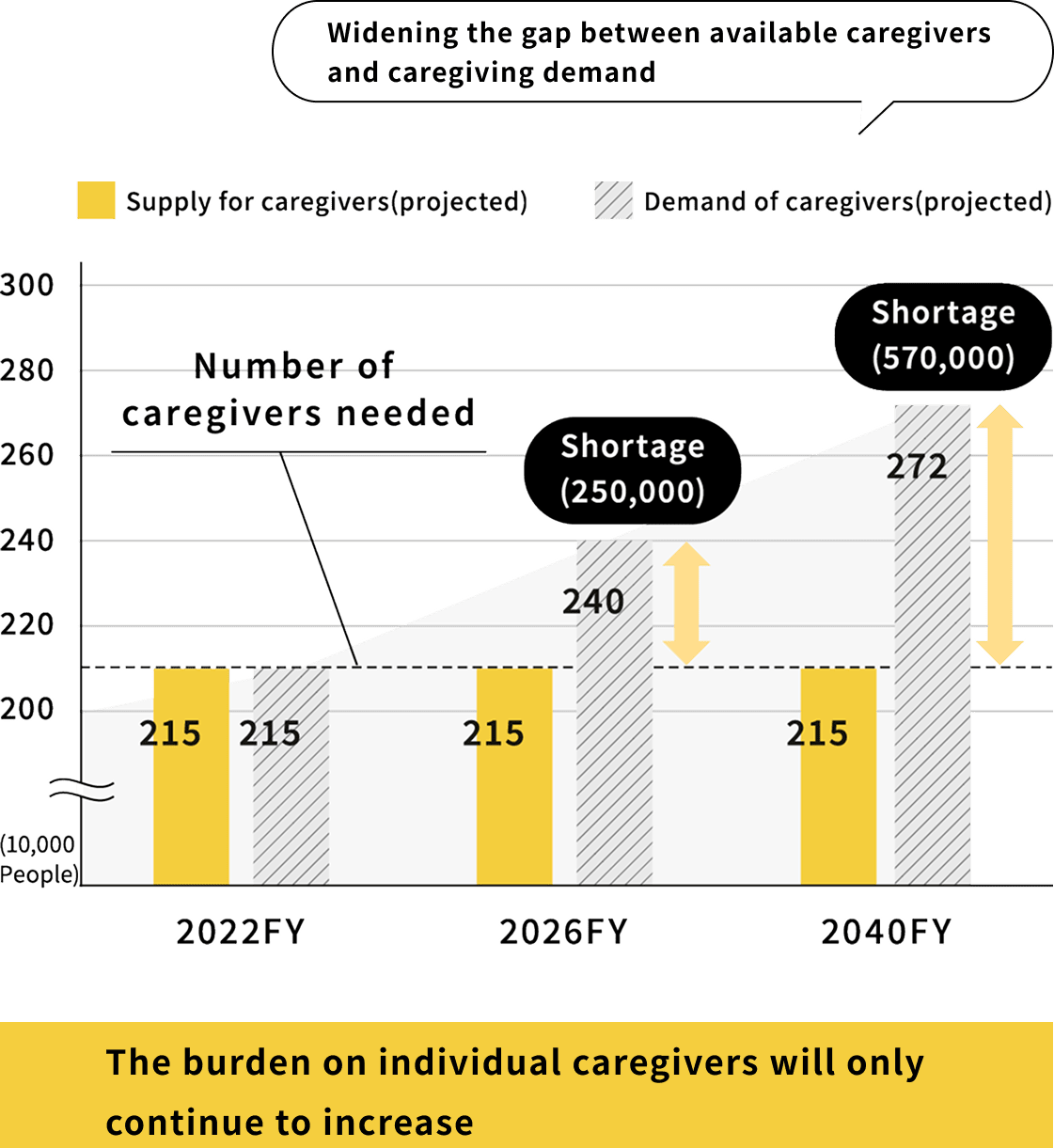
The most pressing problem facing senior care settings today is that demand for caregivers far outweighs the supply. As Japan’s society ages and people have fewer children, the percentage of seniors increases, which in turn translates to a greater need for caregiving services and fewer young people to provide them. There is a tremendous shortage, therefore, of staff members responsible for providing these services.
Estimates of a shortage of 250,000 caregivers in 2026 and 570,000 in 2040 predict that without a change of course, an increasing number of seniors who want nursing care will not be able to get it, leading to a major social problem. The situation will inevitably increase the burden on individual workers, eventually making it impossible for them to continue based solely on a desire to help. Sadly, the stress is already becoming difficult for them to bear.
We established the Future Care Lab in Japan because the problems we’re facing demand a ground-up solution, and we believe that technology has the potential to bring about the needed changes.
Both caregivers and care recipients are increasingly willing and eager to embrace technology-powered solutions—yet at the same time, caregivers are expected to focus on services that only human beings can provide.
Strengths of Future Care Lab in Japan
The strength of Future Care Lab in Japan lies not just in “testing” technology, but in building systems that “Implementation in the field.”
-
“Living Lab” Structure
for ImplementationDiverse professionals from care and development collaborate to bridge technology and the frontline.
-
Deep Understanding of Frontline Needs
Interacting with over 100 care providers annually to analyze core issues and support appropriate research design.
-
Multi-dimensional Evaluation Metrics
Evaluating technology from four perspectives: Users, Providers, Managers, and Technology, based on the ATAT model.
※ATAT(Assistive Technology Assessment Tool)
-
End-to-End Support for Frontline Implementation
Providing seamless support from simulation and real-world trials to full-scale adoption and integration.



What Future Care Lab in Japan Can Do
Providing end-to-end support from planning and evaluation to implementation and adoption, tailored to each phase.
-
Solutions for Developers
Providing consistent support from evaluation and
View More
improvement to implementation for companies
developing nursing care products and services. -
Solutions for Nursing Care Providers
Providing frontline-driven support from challenge identification to implementation and adoption for care
View More
facilities and agencies.
Consultations / Inquiries
Please contact us here for support with nursing care technology development,
consultations on implementation in the field, media inquiries,
or information regarding various projects for government and public agencies.