On-Site Testing
Future Care Lab in Japan’s first on-site testing project started shortly after the Lab was established.
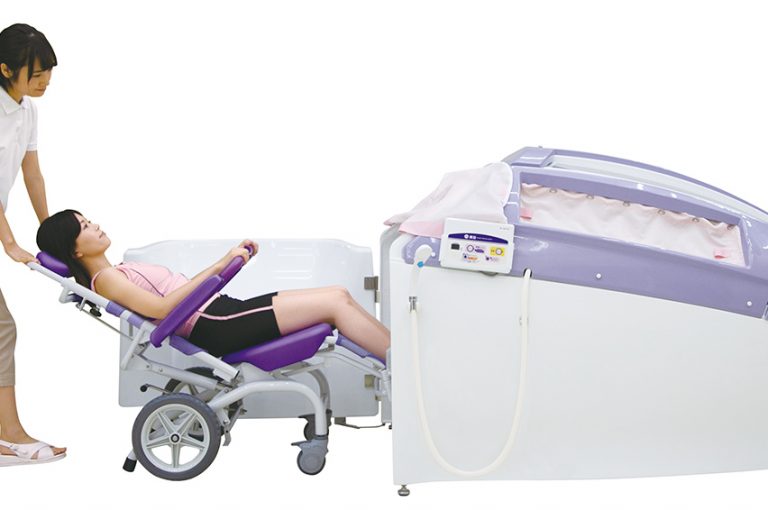
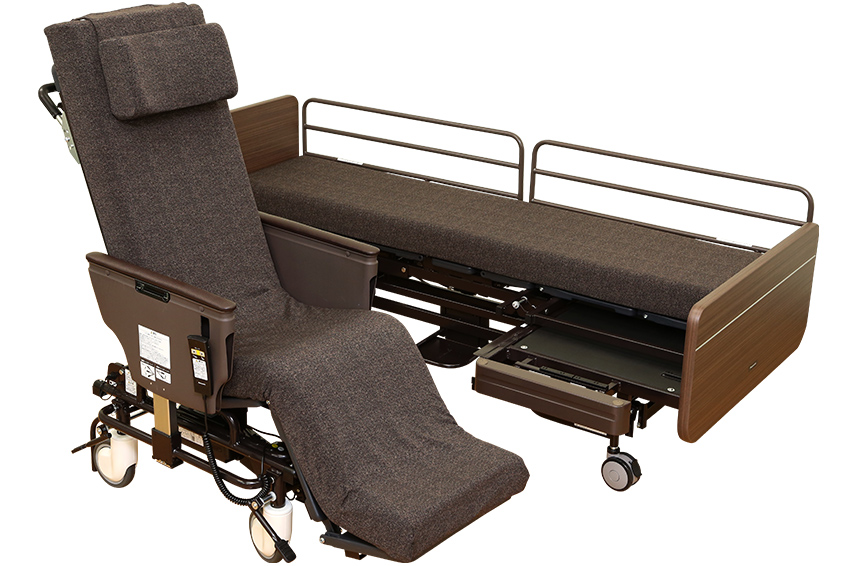
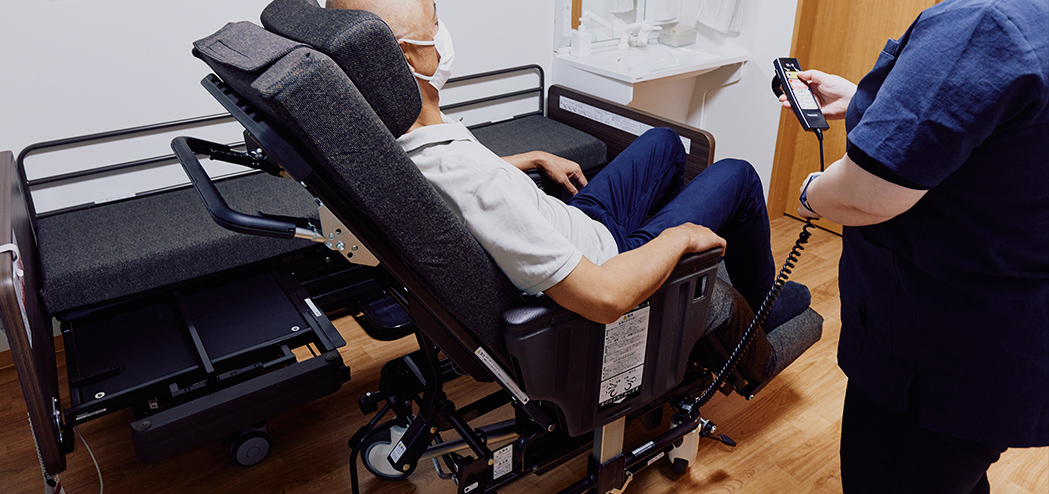
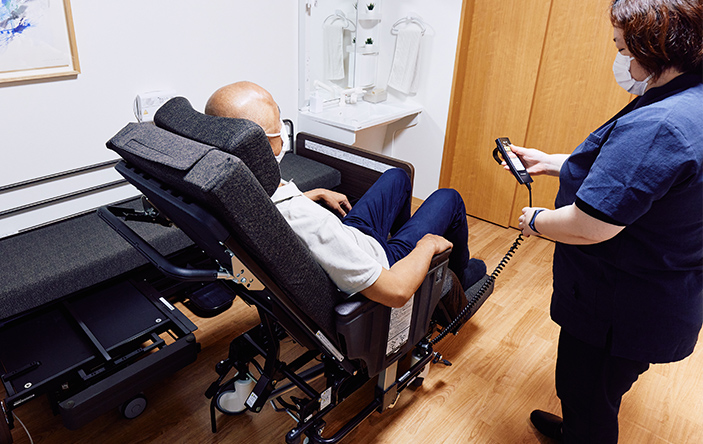
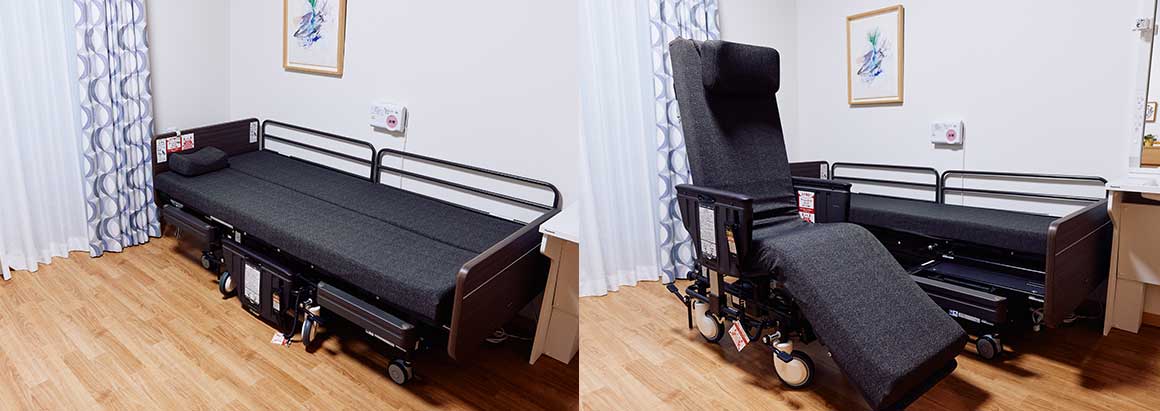
It featured the Resyone Plus Rise Assisting Robot, technology that makes it easier to transfer people from beds to wheelchairs.
The Lab performed on-site testing of Resyone Plus in tandem with a development company. The introduction of the product resulted in satisfaction across the board—among users and their families, caregiving professionals, and facility administrators alike.
On-Site Testing
Thanks to the Lab’s testing, we were able to achieve a full-scale rollout
SIDE: Development Company
One of the most physically demanding tasks caregivers face is helping with transfers. We wanted to use robot technology to make it easier for them to get people from their beds into wheelchairs, in turn making caregiving settings better places to both give and receive care. That’s what led us to develop Resyone Plus.
Our work with Future Care Lab in Japan (“the Lab”) started with us giving them a product presentation as part of our marketing activities. After looking into it, they decided to rent out the Resyone Plus to their Sompo Care facility for a two-week trial. It was the first time the facility had adopted a technological solution, so we were concerned that they might be resistant to the idea. But the Lab team paved the way for us with the nursing care facility, so everything from getting the products in there to interacting with the on-site team went smoothly.
To ensure our products can be used in even more nursing care settings in the future, we will continue to listen to feedback from the front lines and reflect it in our product development and improvements.
It is predicted that by 2025, 30% of Japan’s population will be elderly, and the number of people requiring nursing care will reach 8.3 million.
As a “partner supporting the lives of the elderly,” we aim to contribute to nursing care support that brings smiles to everyone, including users, their families, and care workers.

This project brought home just how critical requirement definitions are when introducing new technology
SIDE:Future Care Lab in Japan
In nursing care settings, there were cases where transferring a patient between a bed and a wheelchair required two care workers. This led to challenges, such as the difficulty of coordinating the timing for two staff members to be available at once, and the heavy strain on their lower backs from lifting patients during transfers.
When the development company introduced “Resyone Plus” to us during a sales visit, I thought that this product—which allows half of the bed to detach and become a wheelchair—would definitely help solve these issues.
We started by renting out the beds to a facility for two weeks as a trial in order to do some on-site testing. Not only was this our first on-site testing effort after establishing the Lab, it was also the first time we had introduced a technology to our flagship facility—so the head of the senior care center and its employees were a little apprehensive about whether they’d really be able to make it work. But a few days later the employees put it to use, and after a week they told us that the Resyone Plus was making things easier on them. When we went back to collect the beds two weeks later, they didn’t want us to take them. Both the users and their families were delighted with the product, so we decided to officially introduce them to the facility.
The development company carefully summarized the methods for evaluating the effectiveness before and after implementation. Being able to visualize the positive evaluations from all three parties—the users and their families, the care staff, and the facility managers—served as a great reference for the Lab’s subsequent technology verifications.
Furthermore, this case reaffirmed the importance of defining requirements when introducing technology to nursing care settings, such as determining the target user profile and assessing whether it is a good match.
Going forward, we want to make a concerted effort to bring in solutions for users who need more intensive levels of care. The role of the Lab in this project was to make clear requirement definitions and serve as an intermediary between nursing care facilities and development companies so that we could seamlessly offer the right product to the right people—and the experience gave us lessons that serve us with every piece of technology we work with.
Interviews based on information current as of September 2021.