– Creating a New Form of Nursing Care through the Symbiosis of “Humans” and “Technology” –
SOMPO Holdings, Inc. (Group CEO: Kengo Sakurada) and SOMPO Care Inc. (President: Ken Endo) are developing nursing care and healthcare businesses with the aim of realizing “Japan as a wealthy, long-lived nation the world can be proud of.”
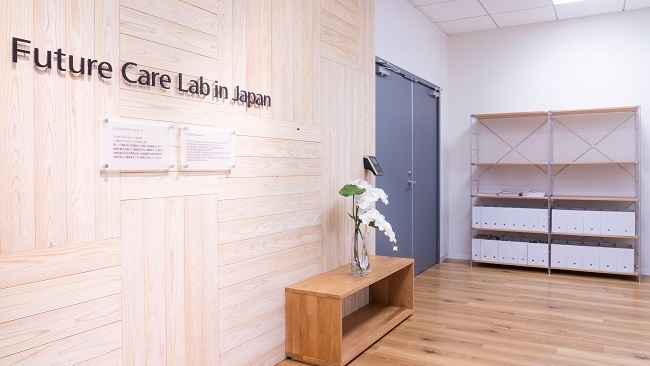
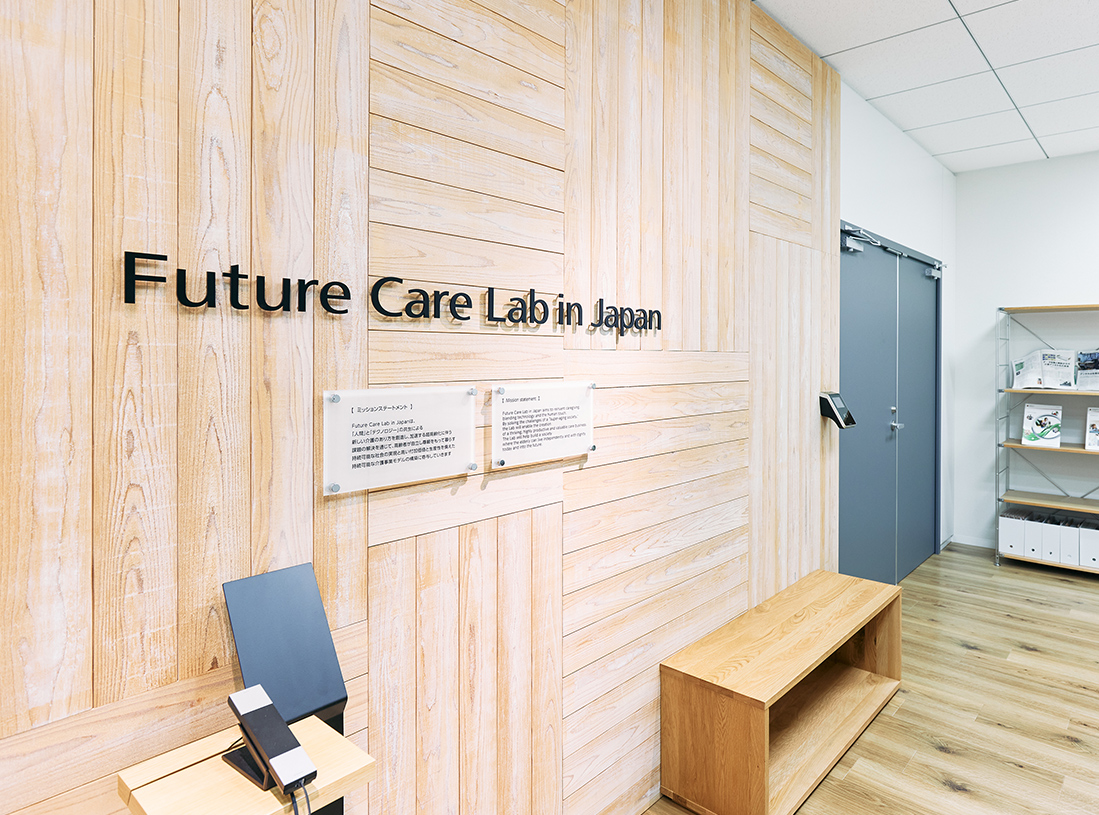
We are pleased to announce that today, Tuesday, February 5, we have launched “Future Care Lab in Japan,” a project to create a new way of providing nursing care through the symbiosis of “humans” and “technology,” and have opened a research facility (the “Lab”) to demonstrate the latest domestic and international technologies.
1. Background
(1) Supply-Demand Gap in Nursing Care Personnel
In recent years, the number of elderly people requiring care has continued to rise in Japan alongside the growing elderly population. The number of people certified as requiring nursing care (or support) has increased from approximately 2.5 million in 2000, when the Long-Term Care Insurance System was launched, to approximately 6.2 million in 2015, and is expected to reach 8 million by 2025.
Meanwhile, securing human resources has become an urgent issue on the front lines of care services, with approximately 67% of long-term care insurance service providers reporting a labor shortage. Furthermore, as demand for care increases, it is predicted that while approximately 2.45 million care workers will be needed by 2025, the actual number of personnel will be approximately 2.11 million—leaving a projected shortage of about 340,000 workers.
This supply-demand gap in nursing care personnel is not only a management challenge for care providers but also a significant social issue facing Japan as a super-aging society.
(2) Growing Acceptance and Expectations for Technology in Nursing Care
According to a survey by age group regarding the intention to use nursing care robots, the average intention to use them across all age groups is approximately 63%, both for when providing care and when receiving care. This intention tends to increase with age; among those in their 60s and older, the intention is approximately 68% for providers and 70% for recipients. This indicates that as the prospect of caring for oneself or one’s parents becomes more immediate, expectations for the use of technology in nursing care rise.
While acceptance and expectations for technology are growing for both caregivers and care recipients, we believe it is equally important for humans to focus on the aspects of care that only humans can provide.
※1 Source: Ministry of Economy, Trade and Industry, “Report of the Study Group on Elderly Care Systems for Future Supply and Demand of Nursing Care”
※2 Source: Care Work Stability Center, “2017 Survey on the Actual Conditions of Nursing Care Work”
※3 Source: Ministry of Health, Labour and Welfare, “Required Number of Nursing Care Personnel Based on the 7th Nursing Care Insurance Business Plan”
※4 Source: Ministry of Internal Affairs and Communications, “2015 White Paper on Information and Communications”
2. Objectives
Against this background, the Lab proposes a new vision for nursing care through the symbiosis of “humans” and “technology” by effectively utilizing ICT and digital technologies and redefining the care that only humans should perform. Consequently, we aim to close the supply-demand gap for nursing care personnel, build a sustainable care business model, and realize a sustainable society where the elderly can live with peace of mind. The Lab specifically aims to achieve the following three goals:
(1) Improving Productivity of Nursing Care Services
By conducting rigorous technical and safety validations at the Lab, we aim to introduce effective technology into the front lines of care services, striving for a dramatic leap in productivity.
(2) Improving Working Conditions and Ease of Work for Care Staff
Through productivity gains, we will realize improvements in the compensation and treatment of care staff. Furthermore, we aim to reduce the physical and mental burden on care workers and create an environment that is easier to work in.
(3) Enhancing Quality of Life (QOL) for Users
By utilizing technology, we aim to increase the options available to care recipients. By allowing care staff to focus on care that only humans can provide, we strive to support the independence of our users and improve their overall Quality of Life (QOL).
3. Activities and Schedule
(1) Business Analysis of Nursing Care Work
① Investigate the actual tasks performed by care staff and the time required for each.
② Categorize tasks that should be performed by “humans” and tasks that can be replaced by “technology.”
(2) Validation of Technology and Safety / Pilot Implementation
① Nominate technologies aligned with the business analysis.
② Conduct technical and safety validations at the Lab, as well as joint research and development with
manufacturers and other partners.
③ Implement pilot programs at SOMPO Care facilities.
(3) Full-scale Implementation
① Full-scale implementation across SOMPO Care facilities.
② Full-scale implementation in new wings designed around the concept of “new nursing care.”
【Reference】
●Mission Statement of “Future Care Lab in Japan”
●”Future Care Lab in Japan” URL and Location
Address: Glass Cube Shinagawa, 4-13-14 Higashi-Shinagawa, Shinagawa-ku, Tokyo